





UPSC Lifebloods brings to you its initiative of subject-wise quizzes. These quizzes are designed to help you revise some of the most important topics from the static part of the syllabus. Attempt today’s subject quiz on Science and Technology to check your progress.
QUESTION 1
With reference to the stages of Polar Satellite Launch Vehicle, consider the following pairs:
1. First stage – This stage in the PSLV involves the famous, indigenously developed Vikas engine and a liquid fuel.
2. Second stage – This stage uses a solid propellant as fuel.
3. Third stage – This stage is related to rapid acceleration.
How many of the pairs given above are correctly marked?
(a) Only one pair
(b) Only two pairs
(c) All three pairs
(d) None of the above pairs
Relevance: The question on PSLV is important for USPC prelims, as it is frequently in news. The question tests understanding of basic space technology and stage-wise functioning of rockets. Aspirants should also read about GSLV and SSLV.
Explanation:
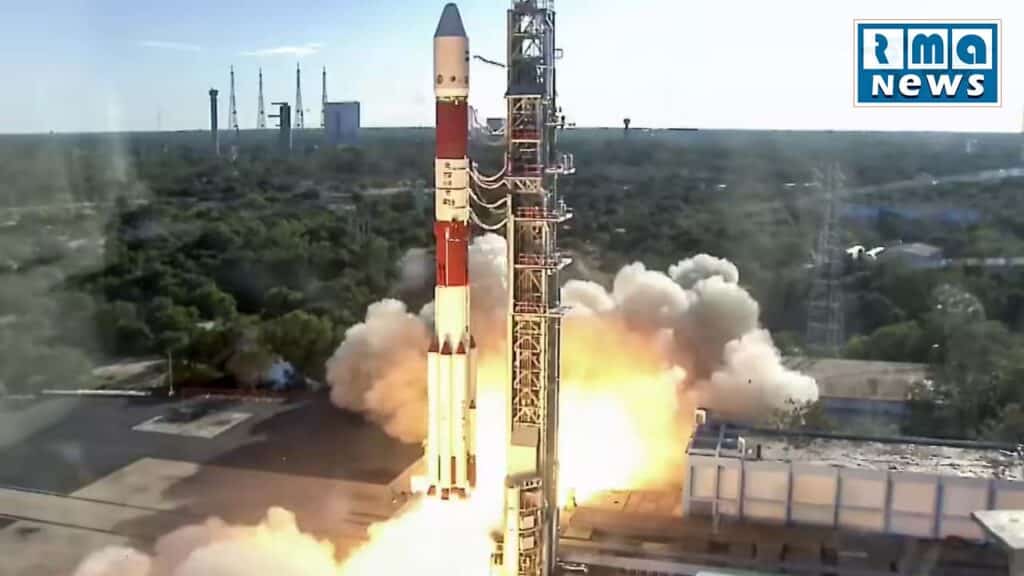
— The PSLV, or Polar Satellite Launch Vehicle, is what is known as a four-stage rocket. The stages refer to different parts of the rocket, each of which have their own engines and fuel. Each of these stages sequentially take charge of propelling the mission. They get detached and discarded after doing their job. The stages are sometimes also used to refer to the different phases of the mission flight.
— The first stage involves the lift-off. This is a near vertical journey till an altitude of about 50-60 km. This is the stage that requires the most work because the rocket has to fight gravity as well as atmospheric drag. For this reason, this stage needs a very heavy engine and lots of fuel.
— In the case of the PSLV, the first stage uses a solid propellant as fuel. The first stage forms a large part of the rocket, and constitutes the bulk of its weight. This stage lasts barely two minutes, during which a huge amount of fuel is consumed. After the fuel is spent, this part of the rocket becomes deadweight. So, it is jettisoned. It detaches from the main body of the rocket, and falls off, passing the baton to the second stage. Hence, pair 1 is not correct.
— During the second stage, the rocket continues to move vertically — and horizontally at the same time as it prepares to get into orbit. The second stage in the PSLV involves the famous, indigenously developed Vikas engine and a liquid fuel. This stage takes the vehicle to about 220-250 km from Earth’s surface before burning out. Hence, pair 2 is not correct.
— In the third stage, the vehicle is moving almost entirely horizontally, going around the Earth in an orbit, or rather a sub-orbital trajectory. To maintain this trajectory, and avoid falling towards the Earth, it needs to travel at very high velocities, usually 26,000 to 28,000 km per hour. The third stage is, therefore, about rapid acceleration. The PSLV rocket burns solid fuel to achieve this. Hence, pair 3 is correct.
— The vehicle begins to go around the Earth at very high speeds, but does not yet reach its designated orbit. That happens in the fourth stage, which involves precisely placing the satellite in the intended orbit.
Therefore, option (a) is the correct answer.
QUESTION 2
With reference to the cosmic rays, consider the following statements:
1. These are particles of which mostly are protons.
2. Cosmic rays travel in straight lines.
3. Cosmic rays originate only from the Sun.
How many of the statements given above are correct?
(a) Only one
(b) Only two
(c) All three
(d) None
Relevance: Topics like Cosmic rays are important due to their link with space research. Aspirants must learn about basic physics concepts and sources of radiation. UPSC can frame conceptual traps to check scientific reasoning and elimination skills.
Explanation:
— The cosmic rays aren’t rays at all. They’re particles: mostly protons, but also helium nuclei, electrons, and occasionally heavier atomic nuclei stripped bare of their electrons. Hence, statement 1 is correct.
— They travel through interstellar space carrying enormous amounts of energy packed into something far smaller than an atom.
— The highest-energy cosmic rays, however, remain a genuine mystery. These particles arrive carrying energies so extreme that they shouldn’t even exist – at those energies, particles should interact with the cosmic microwave background radiation permeating all of space and lose energy over long distances.
— Because cosmic rays are charged particles, they don’t travel in straight lines. Magnetic fields – both inside our galaxy and beyond – bend their paths, scrambling their directions over the vast distances they travel. Hence, statement 2 is not correct.
— Cosmic rays come from sources like supernova explosions, pulsars, and active galactic nuclei. Smaller fractions are emitted during solar flares. Hence, statement 3 is not correct.
Therefore, option (a) is the correct answer.
QUESTION 3
With reference to the Ingenuity Mars Helicopter, consider the following statements:
1. It has completed the first powered and controlled flight on the Red Planet.
2. It has been developed by Nasa.
Which of the statements given above is/are correct?
(a) 1 only
(b) 2 only
(c) Both 1 and 2
(d) Neither 1 nor 2
Relevance: The question on Ingenuity Mars Helicopter is important for current affairs-based prelims questions. UPSC can ask factual questions on milestones in space exploration and innovations.
Explanation:
— On April 19, 2021, NASA’s Ingenuity Mars Helicopter made history when it completed the first powered, controlled flight on the Red Planet. It flew for the last time on Jan. 18, 2024.
— The helicopter completed 72 flights across nearly three years.
— Nasa’s Skyfall mission, expected to launch in December 2028, will include three small helicopters, inspired by Ingenuity, which made history as the first aircraft to fly on another planet.
Therefore, option (c) is the correct answer.
(Source: science.nasa.gov)
QUESTION 4
The term ‘Petaflop’ refers to a:
(a) unit of computing speed equal to one quadrillion floating-point operations per second
(b) unit of data storage used in supercomputers
(c) type of processor architecture designed for parallel computing
(d) measure of energy efficiency in high-performance computing systems
Relevance: The terms like Petaflop are in news due to advancements in supercomputing. The question tests basic awareness of units related to computing. Aspirants must know about these terms and should be able to distinguish between such terms.
Explanation:
— The National Supercomputing Mission (NSM) is executed and managed jointly by DST and the Ministry of Electronics and Information Technology (MeitY). NSM aims to empower our national academic and R&D institutions across the country by enabling High-Performance Computing (HPC) infrastructures of varied sizes.
— As of now, 39 Petaflops of supercomputers have been built in 37 sites. The most recent infrastructure generation is based on indigenous advancements such as the Rudra server and software stacks. Through NSM, the GoI seeks to reach out to the country’s broad scientific and technological community and provide the country with HPC capacity to solve multidisciplinary grand challenge problems.
— A petaflop (PFLOPS) is a unit of computing speed equal to one quadrillion floating-point operations per second.
Therefore, option (a) is the correct answer.
(Source: pib.gov.in)
QUESTION 5
Which of the planets among the solar system have only one moon?
1. Uranus
2. Earth
3. Mars
4. Jupiter
5. Neptune
Select the correct answer using the codes given below:
(a) 1 and 2 only
(b) 1, 2 and 5 only
(c) 2 only
(d) 2, 3 and 4 only
Relevance: These types of questions seem easy, but test fundamental astronomy concepts. It will also help in getting clarity on static GK linked with current space missions and discoveries.
Explanation:
— A new set of moons has been discovered orbiting Jupiter and Saturn, raising the number of these celestial bodies to 101 and 285, respectively. The discovery is part of the growing list of natural satellites in the solar system, which now has a total of 442 moons.
— The additions include four new moons of Jupiter and 11 of Saturn, formally reported by the Minor Planet Centre, which tracks and verifies small celestial objects.
— Across the solar system, the numbers continue to rise. Earth has one moon, Mars two, Uranus 28, and Neptune 16, while Venus and Mercury have none.
Therefore, option (c) is the correct answer.
Don’t miss | UPSC Current Affairs Pointers of the past week (23–29 March 2026) | UPSC Lifebloods | Hunk of Knowledge




About Author




More Stories
UPSC Lifebloods | Mains answer practice – GS 2 : WTO talks and Neighbourhood relations
UPSC Lifebloods | Daily subject-wise quiz: Polity and Governance MCQs on electoral college of the President of India, disqualification from the Legislative Assembly and more
Hunk of Knowledge | The story of Copper: what is this metal and why it reflects global economic health